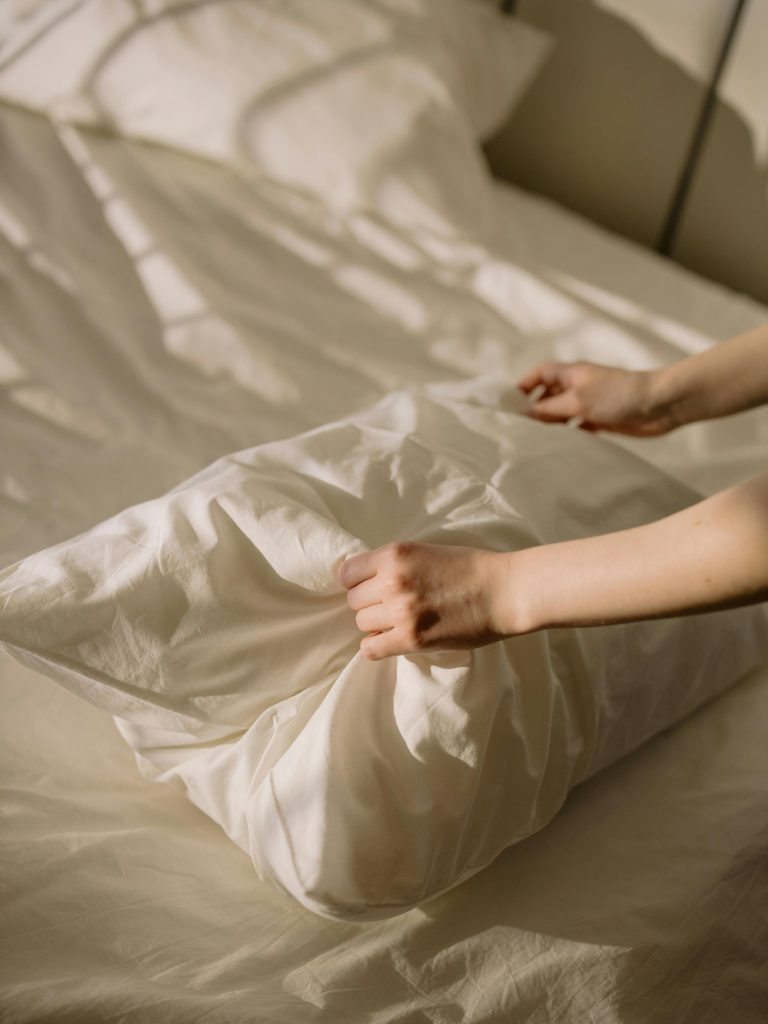
If you’re dealing with ongoing breakouts — especially on your cheeks, jawline, or the side you sleep on — your pillowcase could be playing a bigger role than you think. Most people focus on products, but one of the most overlooked acne triggers is something your skin spends hours touching every night.
Here’s exactly how your pillowcase influences acne, and what small changes make the biggest difference.
Why Pillowcases Impact Your Skin
1. Oil + Sweat Build Up Fast
Even if you wash your face at night, oil, sweat, and bacteria from your skin (and hair) transfer onto the pillowcase every time you sleep.
After a few nights, that buildup becomes a breeding ground — especially for acne-prone skin.
2. Dead Skin Cells Accumulate
Your skin sheds cells while you sleep.
Those cells sit on your pillowcase and re-transfer onto your face, creating congestion.
3. Hair Products Rub Off Overnight
Conditioners, oils, leave-in products, and stylers easily transfer to your pillow.
These ingredients are common pore-cloggers.
4. Fabric Matters
Cotton absorbs everything — sweat, oil, hair products — then presses it back onto your face.
Rougher cotton weaves can also create friction that irritates sensitive skin.
Signs Your Pillowcase Might Be Causing Breakouts
-
Acne appears on the same side you sleep on
-
Breakouts along cheeks, temples, jawline
-
Pimples show up even when your routine is consistent
-
Skin seems clear for a few days, then flares again
These patterns usually point to a nightly contact trigger.
What To Switch To Instead
1. Change Your Pillowcase More Often
Acne-prone skin does best with:
This alone helps many clients see fewer breakouts.
2. Consider a Silk or Satin Pillowcase
Silk/satin reduces friction and absorbs far less oil than cotton.
Benefits include:
3. Tie Your Hair Up
Keeps hair oils off your face and pillow.
4. Avoid Fabric Softeners
Softeners and dryer sheets leave waxy, pore-clogging residue.
Use fragrance-free detergent instead.
How Skin Renew Co. Helps You Break the Breakout Cycle
Small adjustments like pillowcase care are often the missing piece for acne-prone skin. At Skin Renew Co., we look at all the hidden triggers — not just products — to help clients break patterns that keep their acne returning.
If you’re noticing cheek or jawline breakouts that won’t budge, Acne Bootcamp can help identify lifestyle triggers and build a plan that actually sticks.
Clearer skin often comes from fixing what you touch every day, not just what you apply.
FAQ
How often should you replace your pillowcase if you have acne?
Every 2–3 nights is ideal. More often if you use hair oils or sleep on your side.
Do silk pillowcases really help with acne?
They help reduce friction and oil absorption, which can lower irritation and breakouts.
Can hair products really cause acne on the face?
Yes — oils and silicones transfer to the pillow and then onto your skin overnight.
Does my pillow itself matter?
If the pillow is old or unwashed, it can become a long-term bacteria source. Using a clean protector helps.